Product Code:
SCIENCEQEDUSTEMLAB1440007
Description:
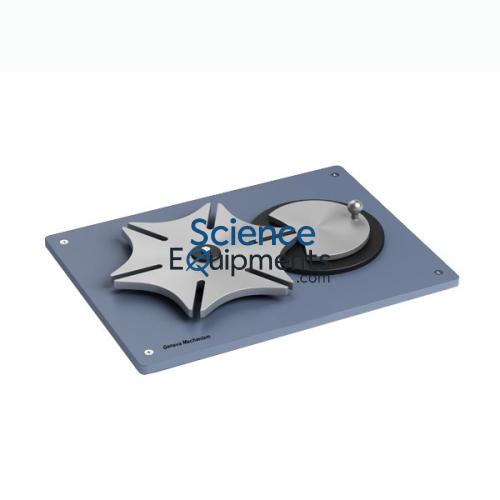
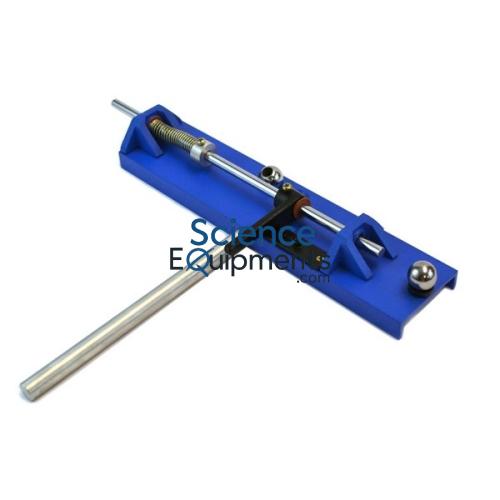
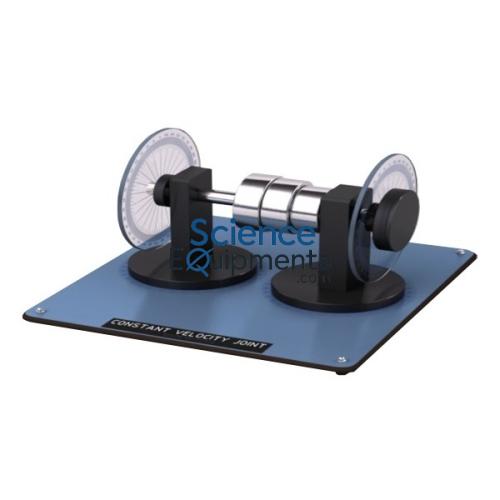
Science Lab Constant Velocity Joint Apparatus
This mechanism demonstrates relative angular motion between two
intersecting shafts through shifting balls as found in front drive
shafts of an automobile.
The angle between input and output shafts is adjustable.
Constant-velocity (CV) joints have become standard design and an
integral part of modern vehicles, primarily due to their superiority in
terms of CV torque transfer.
Despite widespread usage of constant velocity joints there are certain
aspects of their friction, wear, and contact characteristics that are
not well understood.
The apparatus is capable of measuring key performance parameters such as
friction and wear under different realistic operating conditions of
oscillatory speeds and CV joint articulation angles.
The apparatus incorporates a custom-installed triaxial force sensor
inside of the CV joint to measure in situ internal CV joint forces
(including friction).
In this article, the need to directly measure CV joint internal contact
and friction forces is addressed by designing and constructing an
instrumented advanced CV joint friction apparatus using actual
tripod-type joint assemblies.